
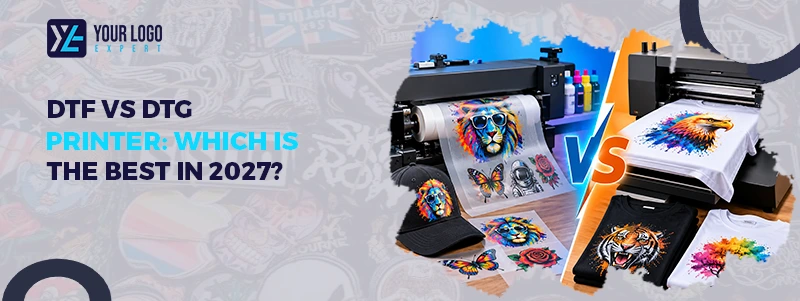
DTF vs DTG Printer in 2027 – Which Is Best for Your Business?
Choosing between DTF and DTG printing can be hard when both offer bright colors and quality prints. However, they work in different ways. One uses transfer film, while the other prints ink directly onto fabric.
The right choice depends on your budget, fabric types, order size, and business goals. Whether you run a custom apparel shop or plan to start a T-shirt business, this guide will help you compare both methods and choose the right one in 2027.
What Is DTF Printing?
DTF stands for Direct-to-Film printing. It is a method that prints a design onto a special PET film. The printer uses water-based inks to create the image. White ink is also used to print bright designs on dark fabrics. After printing, a layer of hot-melt powder is added to the wet ink. The powder is then cured with heat. Once ready, the film is placed on a garment and pressed with a heat press.
The design moves from the film to the fabric. This process creates a strong print that can work on many types of materials. DTF printing is a good choice for businesses that make custom T-shirts, hoodies, sportswear, and other fabric products. If you want accurate embroidery files with clean stitching, consider our custom digitising service.
Get Your Artwork Ready!
What Is DTG Printing?
DTG stands for Direct-to-Garment printing. It works much like a regular inkjet printer, but it prints directly onto clothing. The printer sprays special water-based ink onto the fabric. The garment may need pretreatment before printing, especially when using white ink on dark shirts. After printing, heat is used to cure the ink.
DTG printing is popular for detailed artwork, photos, and colorful designs. It works best on cotton and cotton-rich garments. This method is useful for small clothing brands, custom apparel stores, and businesses that offer one-of-a-kind T-shirts.
DTF vs DTG Printing – Key Differences
Both methods can produce high-quality prints, but their processes and results are different.
01: Printing Process
DTF printing uses a film to transfer artwork onto clothing. The design is printed first, coated with adhesive powder, and cured before heat pressing. DTG printing skips the transfer film. It prints the design directly onto the garment.
The shirt is placed on a flat platen, and the printer applies ink to its surface. DTF needs extra steps for film and powder. DTG has fewer printing steps but may need garment pretreatment.
02: Fabric Compatibility
Fabric choice is one of the biggest differences between DTF and DTG printing. DTF works on cotton, polyester, blends, and many other fabrics that can handle the required heat. This makes it a flexible option for different clothing products.
DTG works best on 100% cotton. It can also work on some cotton-rich blends, but results may vary based on fabric type and printer settings. If you plan to print on different materials, DTF may be the better option.
03: Print Quality and Detail
Both methods can produce sharp designs with bright colors. DTG is known for its soft feel and fine details. It is a good choice for photo prints, gradients, and artwork with many colors.
DTF also produces clear details and bright colors. Its white ink layer helps designs show well on dark garments. However, the transferred design may feel thicker because it sits on top of the fabric. Your artwork, printer quality, ink, and settings also affect the final result.
04: Print Feel
Print feel matters when customers wear custom clothing. DTG ink soaks into the fabric fibers. This creates a soft finish, especially on cotton shirts. The print can feel like part of the garment. If you want clear, high-quality artwork for any print size, consider our vector art conversion service.
DTF prints sit on the fabric surface. This can create a slightly raised or film-like feel. Large designs may feel less breathable than smaller ones. If a soft print is your main goal, DTG is often the better choice. DTF is useful when you need bright prints on different fabrics.
05: Durability and Washing
Customers want prints that last after regular washing. DTF prints can offer good wash durability when the film, adhesive powder, curing, and heat press settings are correct.
DTG prints can also last through many washes when the garment is prepared and the ink is cured properly. Neither method guarantees a long-lasting print without proper care. Poor curing, low-quality ink, and incorrect washing can affect both. Always follow the printer manufacturer’s care instructions.
06: Production Speed
DTF and DTG have different production steps. DTF requires printing on film, applying powder, curing, and heat pressing. However, you can prepare several transfers in advance and press them onto garments when needed.
DTG has a more direct process. You load the garment, print the design, and cure the ink. Pretreatment can add time, especially for dark shirts. The faster option depends on your equipment, order size, and workflow.
07: Setup and Equipment Costs
Both printing methods need an initial investment. A DTF setup may include a printer, PET film, inks, adhesive powder, a curing unit, and a heat press. You also need space for handling and storing transfers.
A DTG setup needs a DTG printer, special inks, a heat press, and pretreatment equipment or supplies. Some models also need regular maintenance to keep the print heads working well. The total cost depends on the printer model, production needs, and supply prices. Compare the full setup cost before buying equipment.
08: Maintenance Requirements
Printer maintenance is important for print quality and machine life. DTF printers use white ink, which needs regular care to prevent settling and clogging. Film handling and powder control also need attention. If you want vibrant, ready-to-press designs for custom apparel, consider our DTF Transfers Service.
DTG printers need regular print head cleaning and ink system care. White ink can also settle, so proper maintenance is important. Both machines need a clean work area and regular checks. Always follow the manufacturer’s maintenance schedule.
Pros and Cons of DTF Printing
DTF printing offers flexibility for businesses that work with different fabrics. It is also useful for custom orders and small production runs.
Pros
- Works on many fabric types.
- Produces bright colors on dark garments.
- Supports detailed artwork.
- Transfers can be stored for later use.
- Works well for custom apparel orders.
Cons
- Prints may feel thicker than DTG.
- Requires film and adhesive powder.
- Needs a heat press and curing equipment.
- White ink requires regular care.
Pros and Cons of DTG Printing
DTG printing is a good option for brands that focus on cotton clothing and detailed artwork.
Pros
- Creates a soft print feel.
- Works well for photo designs.
- Good for small custom orders.
- Prints directly onto garments.
- Does not need transfer film or adhesive powder.
Cons
- Works best on cotton.
- Pretreatment may be required.
- White ink needs regular maintenance.
- Some fabrics may not produce good results.
- Large orders may take more time.
Get Professional Custom Printing Support from Your Logo Experts
Choosing the right printing method is only one part of making quality apparel. Your artwork also needs the right file setup, colors, and print preparation.
At Your Logo Experts, we help businesses prepare artwork for custom apparel production. Our team focuses on clean designs, quality work, and fast turnaround times.
Whether you need custom digitizing, vector art conversion, or DTF transfers, we can help with your next project. Contact Your Logo Experts today and get a free quote for your order.
Our Services
Get Started
Frequently Asked Questions
DTF is better for different fabric types, while DTG is often better for soft prints on cotton.
Both can last many washes when printed and cured correctly.
Both can last many washes when printed and cured correctly.
DTG works best on cotton. Printing on polyester can be difficult and may need special processes.
DTG usually feels softer because its ink soaks into the fabric fibers.
Yes. It is useful for small clothing brands and custom apparel businesses.
Yes, pretreatment is often needed, especially for dark garments.
DTF can have lower equipment costs in some setups, but total costs depend on supplies, machine prices, and order volume.
Yes. Both support colorful artwork, photos, and detailed designs.
DTF is a good choice for different fabrics, while DTG is ideal for cotton T-shirts with soft prints.
Useful Links
Company Info
- +1 (816) 465-9624
- info@yourlogoexpert.com
- 2501 Chatham Rd STE 4504, Springfield, IL, United States, 62704
Copyright © 2026 Your Logo Expert. All Rights Reserved.
